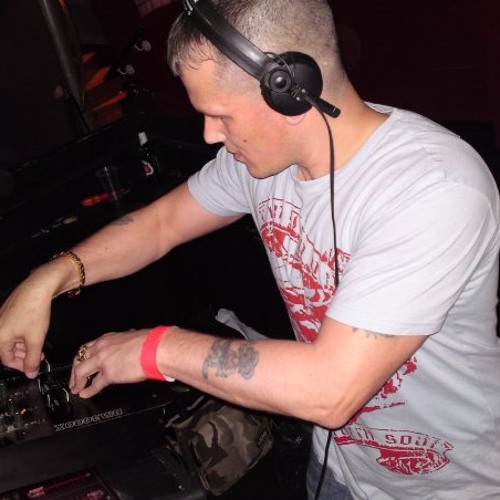
DJ Scott – The Story of a North East Makina Pioneer
When people talk about the history of Makina in North East England, there are certain DJs, MCs, clubs and promoters that repeatedly appear.
One of the most important names in that story is:
DJ Scott
Real name Scott Jenner, DJ Scott was there during the period when Spanish Makina was beginning to find an audience in the North East.
His story takes us through After Dark 2, trips to Barcelona, imported Spanish vinyl, MakinaUK, the New Monkey, Hangar 13 and the famous rave tapes that carried the music around the region.
This isn't simply the story of one DJ.
It's part of the story of how an imported Spanish dance sound developed into something that became deeply connected with North East rave culture.
---
Before North East Makina
To understand DJ Scott's importance, we have to go back to the late 1990s.
The North East already had a strong underground dance scene.
Ravers were listening to mixtures of hardcore, techno, hard trance, Italian dance, Scottish rave and other fast European styles.
Scott was involved with After Dark 2, but the music was beginning to change.
In a detailed 2026 interview about the history of Makina, Scott recalled discovering Spanish records around 1997–98.
At first, he didn't have a huge collection.
But some of those records sounded different enough to make him want to find out where they were coming from.
That curiosity eventually led him directly to Spain.
---
Barcelona
This was an era before Beatport, streaming services and instant digital downloads.
Finding underground European dance music could mean searching record shops, reading labels and catalogue numbers and tracking down distributors.
Scott and his friend Darren Adamson decided to travel to Barcelona.
They went looking for the Spanish records Scott had started discovering back home.
And they found them.
Scott has recalled finding shops packed with the music they'd been searching for and following information on the records to Bit Music.
They returned to the UK carrying a substantial amount of Spanish music.
It was the beginning of something much bigger.
---
Bringing the Records Back to the North East
Finding the records was only the first part.
They then had to be played to North East crowds.
Spanish Makina hadn't yet become the instantly recognisable North East sound that later generations would know.
Scott began putting the records into his sets alongside the other styles already popular with local ravers.
Gradually, the Spanish records started getting reactions.
People wanted to know what the tracks were.
Other DJs became interested.
More records began appearing.
The sound spread.
But something important happened along the way:
the North East didn't simply copy Spain.
Local DJs took elements of Spanish Makina and mixed them with the music they were already playing.
Then the North East's distinctive MC culture developed over the top.
That combination created something recognisably local.
---
The Mixtape Revolution
Before YouTube, SoundCloud and social media, one of the most powerful ways rave music travelled was through:
Tapes.
Scott's crew understood just how important mixtapes could be.
In his 2026 interview, Scott recalled producing a new mixtape every week.
He estimated they were selling roughly:
250–500 tapes every week.
They were distributed through local shops.
But the real number of listeners would have been much larger.
One person bought a tape.
A mate copied it.
Someone played it in a car.
Another copy went to somebody at school or college.
A tape might be copied again and again.
That underground distribution network helped records become local anthems without mainstream radio or major-label promotion.
For many North East ravers, these tapes were their introduction to Makina.
---
From After Dark 2 to the New Monkey
Scott's history is closely connected with After Dark 2.
But around the turn of the millennium another club was about to become much more important.
The New Monkey.
The Sunderland venue would eventually become one of the most famous names in North East underground rave culture.
Scott's account explains that After Dark 2 and the New Monkey shared an owner and had related musical ideas.
When After Dark 2 closed around 2000, the New Monkey increasingly became one of the places where this developing sound found a home.
Makina records, hard dance and the North East MC style came together.
The result was explosive.
---
The New Monkey Sound
The New Monkey became much more than a nightclub.
For thousands of people, it represented an entire culture.
There were the DJs.
There were the MCs.
There were the tapes and CD packs.
There were the cars blasting recordings around estates and town centres.
And there was the unmistakable combination of fast Makina and rapid North East MCing.
DJ Scott became one of the DJs associated with that world.
Alongside him were names that now regularly appear throughout the WGR archive, including DJs such as:
**Matrix
Chrissy G
Culture
Rikki King
Quest
Direct**
and many others.
On the microphones were MCs including:
**Stompin
Tazo
Ace
TNT
Techno-T
Turbo D
Trance
Impulse
Rocking**
and a much larger cast of North East performers.
Many of those performances survive because somebody kept the tapes and CDs.
---
The MC Changed Everything
One of the defining characteristics of the North East version of Makina was the MC.
The Spanish records weren't originally created with the North East MC tradition in mind.
But local rave culture transformed them.
Fast instrumental sections provided space for MCs to develop increasingly rapid lyrical styles.
Some MCs concentrated on crowd hype.
Others developed recognisable rhymes and stories.
B2B MC combinations became attractions in their own right.
Eventually people weren't only asking:
“Who's DJing?”
They wanted to know:
“Who's MCing?”
That relationship between DJ and MC became one of the defining features of the North East sound.
---
MakinaUK
Another important part of Scott's story is MakinaUK.
Before digital music distribution, importing specialist Spanish vinyl into Britain was difficult.
If DJs couldn't get the records, the scene couldn't grow.
MakinaUK helped provide a route for that music.
Historical accounts place its beginnings around 1999, during exactly the period when the North East Makina scene was taking shape.
That record-distribution side of the story is easy to overlook.
But it mattered enormously.
Someone had to discover the music.
Someone had to import it.
Someone had to sell it to DJs.
And those DJs then had to get it onto North East dancefloors.
---
Hangar 13
DJ Scott's story didn't finish with the New Monkey.
Another major name appears in his history:
Hangar 13.
Contemporary rave discussions from the early 2000s connect Scott directly with running Hangar 13.
The promotion became another major part of the North East Makina scene.
Surviving Hangar 13 recordings contain a huge number of DJs and MCs we've been documenting through the WGR archive.
Names connected with surviving Hangar material include:
**DJ Quest
DJ Carter
DJ Direct
DJ Attack
DJ Trouble
DJ React**
with MCs including:
**Tazo
Ace
Stretch
Impulse
Scotty Jay
Techno-T
G-Force
Attack
Jet
KC
Massive**
and many others.
---
The Hangar 13 Boat Parties
One of the more memorable chapters was the Hangar 13 boat-party era.
The Tuxedo Princess, moored on the Newcastle Quayside, hosted major rave events.
A surviving listing for the Hangar 13 Tuxedo Princess Boat Party on 29 August 2004 shows just how large the scene had become.
Multiple arenas brought together DJs and MCs from different generations of North East rave.
These old event listings are incredibly useful today.
They allow us to rebuild a scene that otherwise survives mainly through people's memories and old recordings.
---
Why the Old Recordings Matter
A huge amount of underground rave history was never properly documented.
Mainstream newspapers generally weren't recording who played which Makina set in Sunderland or Newcastle.
There was no permanent social-media archive.
Information existed on:
**Flyers
Message boards
Rave websites
Tapes
CD packs
Record-shop adverts
Forum posts**
Many of those websites have disappeared.
The physical flyers were thrown away.
Hard drives died.
CDs were scratched.
Tapes were lost.
That makes the surviving DJ Scott, New Monkey and Hangar recordings increasingly valuable historical material.
---
The New Monkey Closes
The original New Monkey era eventually came to an end.
Following years of controversy surrounding the venue, the club was raided by police in March 2006 and subsequently closed.
But closing a building couldn't erase the culture that had grown around it.
The recordings continued circulating.
DJs continued playing Makina.
MCs moved to other events.
Promoters organised reunions.
And younger generations discovered the music online.
---
From Tapes to YouTube
Technology changed the way the scene survived.
The original generation had:
Vinyl → tapes → CDs.
Later generations had:
MP3s → forums → YouTube → SoundCloud → streaming services.
Recordings that might once have disappeared with a damaged cassette suddenly had the potential to reach tens of thousands of people.
Young listeners who were children—or weren't even born—during the original New Monkey period could discover the music.
That's one reason Makina has been able to keep finding new audiences.
---
Makina Became North East Culture
Makina originated in Spain.
That part of its history should never be forgotten.
But what happened in North East England was something different.
The region absorbed the Spanish music and built its own culture around it.
Local DJs changed how the records were programmed.
North East MCs developed a distinctive vocal style.
Promoters created their own events.
Ravers developed their own traditions.
Tapes and CDs created local anthems.
Eventually Makina became so closely associated with the North East that younger generations sometimes didn't even realise where the original music had come from.
---
DJ Scott's Place in the Story
It would be wrong to claim that DJ Scott single-handedly created North East Makina.
Scenes don't develop because of one person.
The North East Makina movement was built by:
**Spanish producers
Record labels
DJs
MCs
Promoters
Record shops
Club owners
Tape sellers
And thousands of ravers.**
But Scott's own account provides strong evidence that he played an important role during a crucial period.
He was collecting Spanish Makina around 1997–98.
He travelled to Barcelona looking for more.
He brought records back.
He played the music to North East crowds.
Mixtapes helped spread it.
MakinaUK helped distribute it.
After Dark 2 provided part of the early environment.
The New Monkey became one of its most famous homes.
Hangar 13 carried the culture forward.
Put together, that makes DJ Scott – Scott Jenner an important figure in the history of North East Makina.
---
More Than Nostalgia
Preserving this history isn't simply about saying:
“The old days were better.”
It's about documenting a genuine piece of North East underground music culture.
The Makina scene created its own DJs, MCs, promoters, events, slang, recordings and community.
It connected Sunderland, Newcastle, Gateshead, Teesside and other parts of the North East with a dance-music movement whose records had travelled thousands of miles from Spain.
And somehow those records became part of growing up in the North East.
That's a remarkable music story.
---
Were You There?
https://weedygarageradio.xyz/forum?topic=114
We want to hear from the people who actually lived it.
Did you see DJ Scott at After Dark 2, the New Monkey or Hangar 13?
Did you buy the weekly tapes?
Did your mates copy them?
Did you travel to Sunderland or Newcastle for the raves?
Have you still got any:
**DJ Scott tapes
New Monkey tapes or CDs
Hangar 13 packs
After Dark recordings
MakinaUK vinyl
Old flyers
Photographs
Posters
Tickets
Videos
Record-shop adverts
Old rave website screenshots**
Don't throw them away.
They could contain a piece of North East rave history that no longer exists anywhere else.
Send them into WGR or share your memories with the community.
Together we can keep rebuilding the story.