WGR MUSIC STORIES
From Acid House Warehouses to a National Rave Network
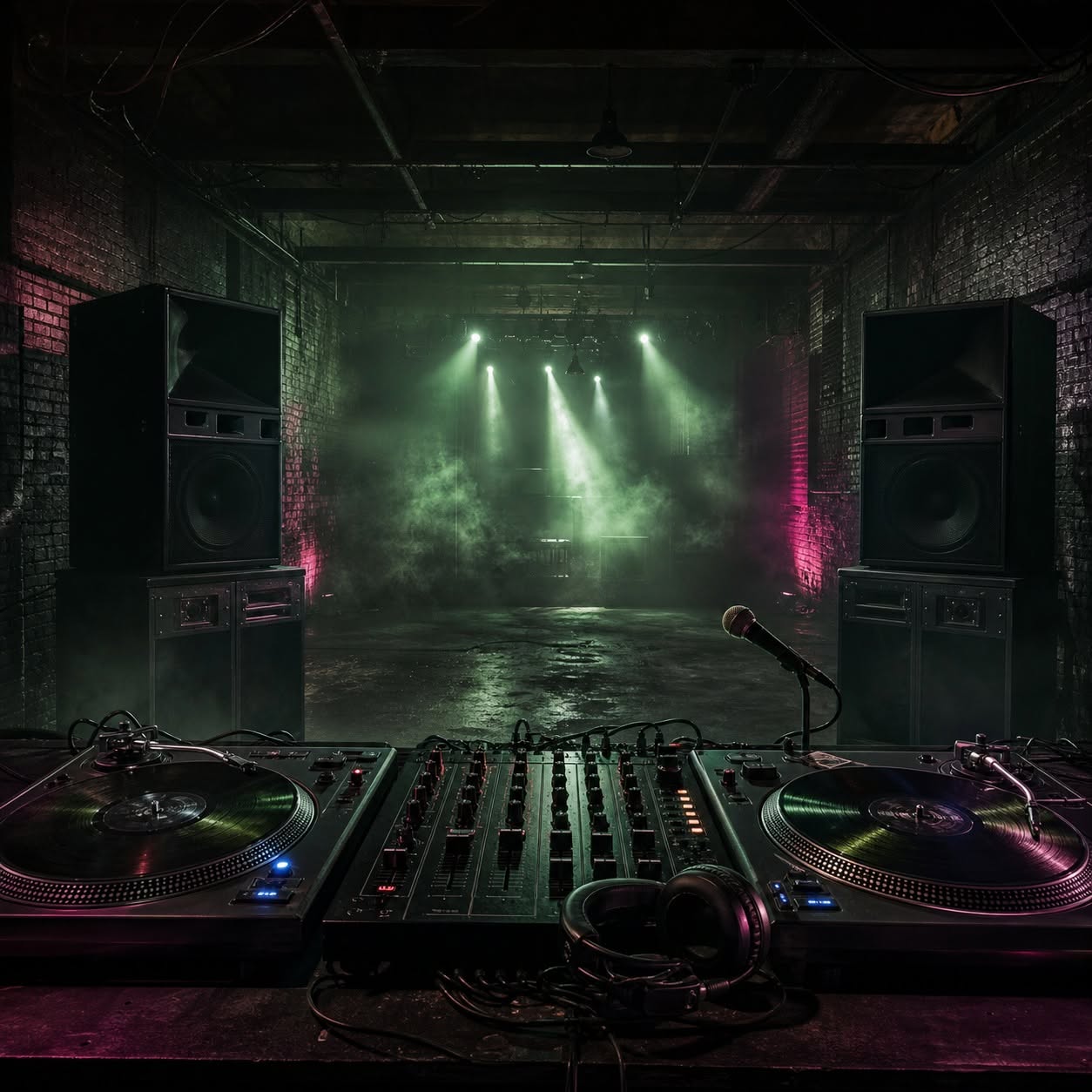
How late-1980s acid house grew from intimate club nights and warehouse parties into a connected UK rave culture.
THE ACID HOUSE MOMENT
Small London club nights helped introduce a different style of all-night dancing: DJs blended imported house, techno, soul, funk and electronic records into long journeys rather than a sequence of familiar hits. The smiley face became a visual shorthand for acid house, but the culture was bigger than one logo. Loose clothing, strobes, simple production and a strong sense of collective release gave the early nights their character.
FROM CLUBS TO WAREHOUSES
As demand grew, promoters moved into warehouses, industrial spaces, fields and temporary venues. Information often travelled through flyers, record shops, telephone lines and word of mouth. A location might be revealed late, turning the journey into part of the experience. These networks allowed a local party to draw people from across towns and regions.
A NATIONAL RAVE NETWORK
By the early 1990s, the culture had developed its own infrastructure: promoters, independent labels, pirate radio, tape packs, specialist record shops, DJs, MCs, sound-system crews and coach travel. Different regions developed distinct tastes while remaining connected. Breakbeat hardcore, jungle, techno, trance, happy hardcore and other faster sounds grew from this restless exchange of records and ideas.
RAVE MOVES INSIDE
Licensed clubs and larger events eventually absorbed much of the energy of the warehouse era. London Museum’s club-flyer collection shows how promoters advertised legal indoor nights while still promising the atmosphere of earlier warehouse parties. The settings changed, but the important elements remained: powerful sound, adventurous DJs, memorable artwork and a crowd ready to participate.
WHY IT STILL MATTERS
Modern discovery happens through streaming, social media and online communities, but the original DIY lesson remains valuable. UK rave culture showed that listeners do not have to wait for the mainstream to approve a sound. Artists, promoters and fans can build their own network, give regional music a platform and create a scene through consistent support.
Further reading:
Camden People’s Museum — Club Culture in Camden Town 1988–2000: https://www.camdenpeoplesmuseum.org/projects/club-culture-in-camden-town-1988-2000
London Museum — Memories of London’s rave nights: https://www.londonmuseum.org.uk/blog/calling-all-ravers-memories-of-londons-rave-nights/
Rave Archive UK — History of UK rave culture: https://rave-archive.com/history/
Related WGR story: OldSkool and the North East Rave Story — https://weedygarageradio.xyz/blog/oldskool-north-east-rave-story